Showing posts with label The Greatest FIlms. Show all posts

Saturday, November 28, 2009

One Man Army


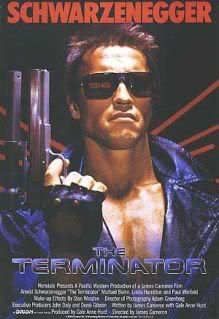
When I started this retrospective I mentioned that there was one film in Cameron's filmography that I held near and dear to my heart. I suppose before we go any further, I should mention that it's The Terminator that I was referring to. I've often held it aloft as a shiny example of what a chase thriller looks like, how it should be done, how it should be cut, scored, shot, staged and helmed. You'll excuse me, then, if every now and then my rhetoric dissolves into a series of gentle but enthusiastic kisses for a film that I value more than the lives of anyone who will ever read this.

I'm sure you all know the plot, but what kind of critic would I be without recounting it? It's the future and despite the fact that we somehow invented and mass-produced energy weapons, it kind of looks like a shitty place to raise your kids. Robots have taken over the world, and not the cuddly R.O.B.-style robots, the Fear Cereal-chewing, red-eyed Battlebot sort of robots. Around 1997 when I was just starting my Final Fantasy phase and you were all enjoying James Cameron's Titanic, super-advanced AI Skynet missed its appointment to take over the world and enslave humanity as prophesised in 1984 by this film. Skynet, with no regard for the prime directive, shoots a naked Austrian robot-man (Arnold Schwarzenegger as the eponymous villain) back in time to kill Sarah Connor (Linda Hamilton) future mother of John Connor, leader of the human resistance. The human resistance send back a single warrior, Kyle Reese (Michael Biehn) to protect her.

Unfortunately for Sarah Connor, Kyle's a bit of a downer. Not only will we not be flying around the galaxy sending space-hippies to their death in fifty years, but he keeps going on about the futility of fighting the Terminator. With the weapons available in 1984, the Terminator is virtually indestructible.

And here's where the film starts getting intriguing. Out of the gate we're introduced to a villain that is unstoppable. He is cold and emotionless and, unlike so many other films that aped its style, The Terminator succeeds in giving the machine absolutely no human qualities. People often wonder about a one ton body builder being cast as a robot that's meant to infiltrate human society, but it lends several degrees of cold, mechanical evil to his character. If he was prancing around just like a normal human, acting precisely like humans do and adopting personality traits and character flaws and all the other things we like to see in our characters he would lose the thing that makes machines scary. Never once in this film do we look at the Terminator and mistake him for human.

Cameron masterfully wrangles Arnold Schwarzenegger's inexperience as an actor and his awkward Austrian screen presence to create a character that is a merciless killer, LOOKS like a merciless killer and has an intangible awkwardness about him as if he was created by machines that have only observed humans from a distance but were quick to dismiss them as dangerous variables.

I have fewer nice things to say about Linda Hamilton and Michael Biehn. Hamilton is a bit bland (although she is written as an every-woman) but I don't think her performance spends any time detracting from the overall impact of the film. Michael Biehn has never been an actor I've liked much. He looks like he was told his father was eaten by wildebeests and never got over being told he lives in a hipster sitcom. I suppose it works well enough when he's playing a soldier who is constantly on edge and was learning to make plastique while we were dancing in demonic little circles to songs about the Black Plague. Furthermore, they have little romantic chemistry. That would be a real complaint if the romance was any more than a simple plot point, but the later scenes could have used the emotional impact a successful romance would have wrought.

If you've noticed, all the things I just listed were "it could have been this, but it remains functional and effective where it is", my point being that despite the criticisms I leveled against it, I'm just pointing out the things it doesn't excel at. Don't let that make you think it doesn't excel like crazy all over the place. First of all, the middle section of the film is as flawless as anything ever put on film. While the climax doesn't hold up to the absolute perfection of the TechNoir shootout and subsequent chase, that's a standard I wouldn't ever hold a film to.

And the early, largely silent scenes with the Terminator are incredibly tense, proving once again how overrated film scores are and how much more effective a film can be when its intentions aren't muddled by manipulative music.

The way James Cameron manipulates the gritty underbelly of LA as a stage for action calls to mind the greatest of classic noirs and is his single greatest accomplishment as a filmmaker as far as I'm concerned. The only way I can think to describe it is to call to mind Taxi Driver. The city itself is almost never directly referenced, but it becomes an indispensable part of the narrative and the visual vocabulary. A series of twisting alleyways strewn with litter and filled with homeless people and greasy dumpsters give way to streets lined with uncaring souls. It's a place where optimism dies. It's almost as apocalyptic as the world Reese grew up in. But every time we think this city can't become more dark and twisted, Cameron jerks us back to Reese's time, where rats are a delicacy and death is almost a relief.

The standoff between the very human, very fragile Kyle Reese and the indestructible, unstoppable Terminator has elemental qualities that make it a timeless formula. Rarely is the contrast between the hero and the villain so harsh, and rarely is an air of hopelessness so effective.

Yeah, it's a fucking bleak film. It's just as bleak as you've heard and probably more bleak than you remember. The whole experience is a bit like being dragged through gravel. It's the sort of thing you walk away from dazed but ready to experience again, hoping that this time the thick atmosphere of oppression will dissolve to allow you to read the story and characters more, but it never does.

The only film I've ever seen that has truly bettered its oft-violated style and formula is No Country for Old Men. That's a goddamn bold statement, but they're two films that I hold in exceptionally high regard, and while James Cameron is one of the most consistent blockbuster filmmakers of all time, he shares one thing with so many great directors of blockbusters. Like Spielberg and like Lucas, his first film will always be his best. If we're not counting that fucking Piranha movie.

11/10

Sunday, October 11, 2009

Car-Fu

I know, I know. "We get it, Oliver. You like fucking action movies. Let's do something else, okay?"

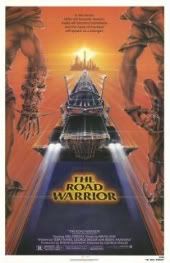
Fuck you, reader I just made up. You're my least favorite reader. Not only have you just insulted me, but you've insulted The Motherfucking Road Warrior, one of the all-time best action movies.

The 1980s were a whirling dervish of pastel colors and Duran Duran, but if we got anything out of it, it's the four great action movies: Raiders of the Lost Ark, Die Hard, The Terminator and The Road Warrior.

Between those four films, The Road Warrior is the one with the most dirt on its knuckles. When I mentioned it to my dad, he said "that shit is nasty", and I've got to hand it to the old man: that's the perfect way to describe the film. Although he'd say it with a grimace and I'd say it with a smile.

I chose to write this review because I watched my copy of it yesterday and when I started trying to talk to people about it, I could barely find a person who had seen it. So, in the interest of enticing you morons to watch one of the best films of the 1980s, the plot:

It's a quarter past the future and some janitor was dusting the big red button on a doomsday device. Now Australia has been turned into a wasteland (waaaakka wakka wakka) ravaged by evil gangs in search of gasoline to continue their dominance. If you have a car, you have life. If you don't have a car, if you can't keep moving and savanging, you die. The rules are very simple and implicit. Like so many mysterious drifters in so many westerns, Max is a man with a past and a grumpy disposition. He doesn't like or have much use for people. He stumbles upon a gasoline-rich community under siege from the brutal gang The Humongous and through a series of escalating events, finds his fate inexorably tied to theirs.

Now, ideally the whole film would be Max battling his way across the wastes, just trying to find enough gasoline to make it to the next gallon, fighting the gangs for it along the way and encountering strange folk. Like The Road but with more nitro-cars.

I came to this conclusion after watching it this last time. The best scene in the film is the opening scene, where Max silently battles the marauders for the gas leaking out of a destroyed car. The high-speed chase shot from a camera on the hood of a car in that lovely widescreen, the tight, breathless editing. That shot of Max drawing his gun, standing off against the raiders as they both desperately eye the gasoline leaking out of the ruined vehicle. Scenes like that is what action movies are all about.

Silence. Let the visuals tell the story. Action speaks louder than words.

And it's those action sequences that are so glorious. The cars aren't just a prop to push the action scenes forward, they're the lifeblood of these characters. If there's one skill you need to master in these wastelands, it's driving stick. In the old west you used a gun to keep yourself alive, but now we have these marvelous ballets of roaring engines and screeching tires.

And George Miller avoids the biggest mistake made by so many car-centric action films: he never makes the cars the combatants. Despite most of the action being fought with cars, they're nothing more than guns with engines. Max always has something dynamic to do in the chases. He never sits there, dead-eyed and sipping his coffee. Whether the doors are being ripped off his car or the raiders are trying to pull him out of the driver's seat, he's never the static center of car-porn.

The Road Warrior is to car chases what The Terminator is to foot chases, what Raiders of the Lost Ark is to fist-fights, what Die Hard is to shootouts, and I can't help but feel like that sells all those films short. It's so marvelous and perfectly paced. It's so exciting and original, it's vision of society after the collapse of civilization so dark and gritty and functional.

Maybe I'm biased. Maybe I'm biased because I can't wait for the bombs to drop and to tie a cowcatcher to the front of my Geo Metro.

11/10

Wednesday, October 7, 2009

Clever Hobbits, to climb so high

If it hasn't already become apparent, I have a fascination with film franchises. I can't really explain it, the appeal tends to be different depending on the franchise (in the case of Star Trek, the appeal is how the filmmakers tried to keep the series relevant over several decades).

Over the past week, I rewatched all of Peter Jackson's Lord of the Rings films. Everyone's seen them, everyone knows them. But a curious thing happened. From 2001-2003, people went buttfuck over these movies. My mom and I must have watched the first two films a dozen times each before the third film came out. When the third film did come out, everyone saw it a hundred times, smiled to themselves and agreed on what a great three years it's been following the little people on their quest to return their faulty jewelry to the jeweler. We all forgot about these films and were on our way.

I realized I hadn't watched any of these films in years and decided it was time to revisit them. Having not seen them in years, I was able to approach them with fresh eyes.

Spoilers ahead for both people in the entire world who haven't seen these films.


My initial reaction was "this looks kind of shitty". My overall reaction is "thank God and all the pretty angels for Peter Jackson".

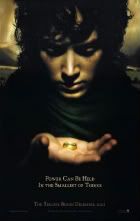
The Fellowship of the Ring

Despite the first film's Academy Award for cinematography, I thought it looked pretty bad. There's a lot of digital noise (I say "a lot", but there's hardly any; my point is any is too much in a fantasy film) and the colors seem to have had nothing done to them. The scenes taking place in daylight look very straightforward and simple. It's not stylized. During those scenes, and particularly the scene where Arwen is being chased on horseback by the Nazgûl, I never forgot that I was watching a stunt crew ride through a field of pines, planted so that they can be sold as Christmas trees. The darker scenes, Moria in particular, are much better, and that'll become a trend throughout the series.

The film as a whole is far more leisurely than the latter two. It allows us a long time to take in Middle-Earth and get to know the characters and their histories. It's all relatively small-scale and character-driven, and all the better for it. A tribute to the three editors and Jackson's unifying vision that the series gets tighter and more plot-driven as it goes, ratcheting up the tension and building to the final battle.

The sets are beautiful, and that's something that we won't see enough of in the later films. Sure, the next two films have lovely sets, but we never spend the same amount of time exploring them that we do here. Bag End and Rivendell especially benefit from the slow tracking shots and long dialogue scenes.

A scene I never had enough appreciation for as a lad was the fight in Moria between the Fellowship and the goblins. That scene is edited to perfection, staged immaculately. The lack of a musical score and the confined nature of the room the scene takes place in, especially when the cave troll lumbers in, makes this possibly the best-realized combat scene in a trilogy of films fraught with combat sequences.

Another kind thing I can say about the film is that it has my favorite ending of any of the films in the trilogy. The splintering of the Fellowship and the death of Boromir lead so perfectly into that heart-stopping shot of Frodo and Sam looking over the mountains and into Mordor.

Outside of individual scenes, I can't stress enough that this is very small-scale. It's a great film, and on its own would easily be one of the best fantasy films of all time. Unfortunately, it's improved upon in almost every area by the succeeding two films in the series. So let's move on to them, shall we?

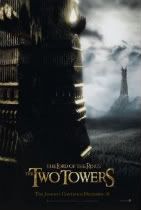
The Two Towers

Here's where the cinematography gets better. The colors are still unsaturated and unstylized, but the picture is crisper, less digital. The whole film gets a naturalistic look that makes it easy to believe that Middle-Earth is a real place and the exotic New Zealand locales only add to this strange-but-believable world. It's not how I would have thought to shoot the trilogy, but it's probably the best possible way to shoot the trilogy.

Even the night scenes, particularly Helm's Deep, have a very natural look that doesn't detract from the very real fear of seeing genetically engineered soldiers assembled out of H.R. Giger paintings and death row inmates as far as the eye can see.

I would describe the look of the film as "exceptionally functional, but unexceptional". Of course, the look of this film doesn't begin or end at the cinematography, because this is the ultimate effects film. Never once gratuitous, always working hard to blend the CGI and visual trickery into the shot as seamlessly as possible, every filmmaker dealing with CGI has learned almost their entire modern effects vocabulary from these films and not one of them (with the possible exception of Chris Nolan, but I attribute that to his notorious hatred for CGI) has attained the heights of beauty that Jackson has for this film.

It speaks to Jackson's desire to make his audience live and love the world of Middle-Earth and his resistance to the studio's pressures that he never once goes for cheap, flashy CGI. Sure, he takes a lot of shortcuts with it, but he's not relying on it to sell his films. As a 12-year-old going to see this movie, I was amazed by the realism of the Ents, of the massive armies. I never once recognized it as CGI or a special effect. I thought there were thousands of actors murdering each other for the sake of this film.

And that's not even the most impressive effect. Yes, Gollum is beginning to show his age. His skin is a bit textureless, his eyes unemotive, but his movements are so perfect and Andy Serkis's performance...my God, Andy Serkis's performance. Perfect. Magnificent. Iconic. Sick, sad, pathetic, endearing and adorable all at once, wrapped together with the hint of malice in his every inflection and topped with that voice that everyone will remember forever. He's our generation's Yoda. If I were to present a case of the Academy's egregious oversights in its acting categories, Exhibit A would be Jeff Goldblum in The Fly, Exhibit B would be Andy Serkis for The Two Towers and Return of the King.

That said, the three converging plot strands are fantastic. Aragorn-Legolas-Gimli's story is exciting and breathless with all the exciting action and heroics. Frodo-Sam-Gollum is the dark side of the trilogy, the part that wears you down and makes you remember what's at stake. Elijah Wood's performance is darker and sadder as Frodo begins to lose his will and lose his mind. But the overlooked middle child of this film is Merry-Pippin. Here we begin to see Merry take charge of his life and his responsibility. He starts to grow up and fight while Pippin stays naive and confused.

It's a marvelous film, as if you didn't already know that.

The Return of the King


Can your books do this, book fags? CAN YOUR BOOKS DO THIS?

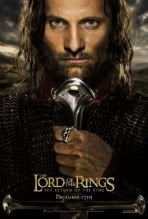
Let me back up. If you have memories of scraping your brains off the back of a theater wall with a chisel, congratulations, you've seen The Lord of the Rings: The Return of the King (or The Dark Knight). It's one of the most awesome uses of film to tell a story on an enormous scale, comparable only to Lawrence of Arabia.

This trilogy has been an epic since frame #1, but by this film it's the epic to end all epics. There's a reason The Lord of the Rings is synonymous with the word "epic". There's a reason I just used the word epic four times in one paragraph. There's no other way to describe this film. Every vista, every aerial shot, every mind-blowing set or effects shot just hammers home what an incredible achievement of scale this whole series has been and how we've been building since the first second to a climax unlike anything the modern filmgoer has ever seen.

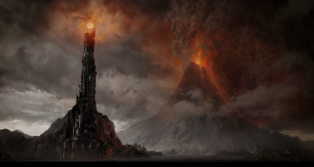
The cinematography is dark and stylized, finally. Especially in the Frodo-Sam-Gollum plot line, the sun seems to have been blown out of the sky. The only colors we ever see are the nightmarish greens of Minas Morgul and the furious reds of Mount Doom. Gondor is all glossy white marble, shining swords and armor. The orc makeup seems to have metastasized and exaggerated, like an orc looking at itself in a funhouse mirror. The editing never once stumbles during its tour-de-force juggling act.

Almost everyone in the cast is doing the best work of their careers, throwing themselves recklessly against the material, clinging to Peter Jackson's vision, taking the leap and hoping it doesn't become the biggest disaster, the biggest laughing stock in filmmaking history.

Despite that, Aragorn's arc was finished long ago, and so he doesn't spend much time on screen. Mostly he's the eyes through which we see the War of the Ring. It's the Hobbits that get the dynamic acting. Elijah Wood is haggard, barely a shell of a man being manipulated, controlled, led and fighting it every second of the way. Sean Astin plays Sam as barely being able to keep Frodo, let alone himself, sane in the face of the task that never should have been theirs.

Still, Merry and Pippin's story is sadly overlooked by admirers of these films. Dominic Monaghan's and Billy Boyd's performances, like everyone's performances, is more full of urgency and force than in the previous films.

So the question that I asked myself before I started watching these films was: do they hold up?

Yes. Absolutely, yes. Every laurel thrown its way, every award was deserved. It's our Star Wars. It's the reason movies have mass appeal. It's an experience that brings people together. Maybe it'll end wars.

Thank god and all the pretty angels for Peter Jackson.

The Fellowship of the Ring - 10/10
The Two Towers - 10/10
The Return of the King - 10/10
The Lord of the Rings - 11/10

Tuesday, July 21, 2009

It's hard to swat a fly...when you love it.

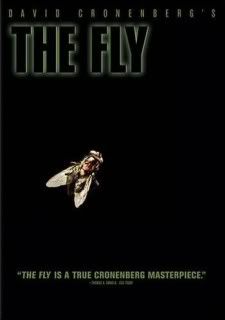
As I've said many times before, there's something to be said for turning a genre piece inside out, refining its more tactile elements to a mirror shine. David Cronenberg's The Fly is one of the best possible examples of this. If I were to give you a plot synopsis (which I will), and you were unfamiliar with the story, you could easily mistake it for any number of cheap 80's creature features.

Driven scientist Seth Brundle (Jeff Goldblum) has made something great: a teleportation device. He shows it to a female reporter, Veronica (Geena Davis), who begins to document his struggles with the machine. As their romantic relationship begins to take form, so does the machine. One night, Seth impulsively decides to test it on himself. Little does he know that a fly has made its way into the teleportation pod with him. He teleports to the other side of the room and fuses himself with the fly. At first, Seth feels great. He has more energy than he thought possible and is developing almost superhuman strength. Slowly, though, the effects become more perverse. As the fly begins to take over his body, he fights for control of his mind.

This is the best work Jeff Goldblum has ever done. This continues a long line of actors doing not only the best work of their career, but work miles above anything their previous or subsequent work suggested them capable of, in a David Cronenberg film. For example, James Woods, Jeremy Irons, Christoper Walken, Viggo Mortenson, etc., etc.

He has the awkward passion of Brundle, the anger and malice of the fly, and the tragedy of Brundlefly from the first moment you see him to the last, under literal pounds of makeup, acting with only his eyes. If there is proof of a flaw in the Academy Awards process, exhibit A would be Jeff Goldblum's lack of a nomination, and subsequent win, for this film. In fact, exhibit A would be the fact that it took until 2007 for an actor in a Cronenberg film to get a nomination.

And that Cronenberg himself has never been nominated.

David Cronenberg cut his teeth on horror films in his younger days, and he seems to have a true passion for them. He is clearly a Goremonger, but no Goremonger before Cronenberg has been able to tap into our fears of mutation and bodily disfigurement the way Cronenberg does (for the best example of this, see Dead Ringers, one of THE BEST films ever made--as in, top 10 best films ever sort of Best Films Ever). This is the first time I've seen this film since I was thirteen years old, when I had nightmares for days. Up to that point, I had never felt violated by a film; clearly I had never seen a Cronenberg film. No one has ever, and I doubt anyone will ever, harness horror the same way Cronenberg has. He is the god of the genre, and anyone who disputes that can get bent.

And my GOD does this film make a case for practical effects over CGI. There is no way in the name of all the pretty demons of Hell that CGI could make anything this grotesque without it becoming completely synthetic. That we can still see Jeff Goldblum's features and that the fly seems to be growing out of Brundle's own skin instead of changing his skin into its own is the sort of visceral horror that no amount of money spent on any amount of computer generated imagery could ever duplicate.

It's a great thing when your only complaint about a movie is that it isn't long enough, but that's the only negative thing I can say about it. It's a visceral cross-section of man, insect and machine (made literal in the final moments of the film). It's a monster movie only Cronenberg could turn into a tragedy, and there will never again be anything like it.

11/10