Showing posts with label horror. Show all posts

Thursday, March 11, 2010

Madness: It's A Rule Now

The Crazies is probably the best movie that can be made out of the modern horror formula, you know, the one I keep talking about that's as stale as a brick that went through the wash but sat in the drier for days. Oh, you don't know the formula, liar? It's about a capable, resourceful man who has to take charge of a band of survivors when his hometown is overrun by a grotesque threat (it's almost always zombies). A second threat, almost always human, is introduced to up the stakes and answer the cynical modern horror audience's calls to see humanity played as a bunch of bloodthirsty opportunists. The hero and his love interest are the only ones to survive at the end, but the cynical end credits usually blow them up or sick a Rancor on them or something. The audience masturbates through the rest of the end credits.

Any regular readers (are you there?) know that I like genre films (stop reading at any time), and The Crazies is exactly that: a genre film polished to a mirror shine, then rubbed with diamond cream and vampire sparkles. I know I've spent the last month bitching about how boring modern horror is, and The Crazies represents everything that's boring and antiquated about the genre, but it does it with excitement, good characters and a reasonably involved story. Oh yeah, and some very pretty visuals. Really, way too pretty for this film. So pretty, in fact, that it makes me think this is just a genre effort from an extremely talented filmmaker who hopes to use a simple genre film to break out onto the mainstream. He goes through all the motions, but everything about this film is absolutely better than it has to be. The standard-issue jump scares are still there, but they're mostly there to make the film palatable to 14-year-olds giving each other awkward, raw handjobs in the back of the theater while the projectionist records it to splice into the second reel of Alice in Wonderland and make that film more nightmarish.

So yeah, the story fits straight into that mold like some sort of script girder. A sheriff, his wife, her secretary and the deputy are one of only a handful unaffected by a disease that makes the infected illogical, violent and veiny. The military shows up and starts killing everyone and our heroes try to escape.

I think the reason this film works so well is that, while it advertises itself as a horror film, has some jump scares and zombie-like things that vaguely define it as a horror film and otherwise fits into the mold of a horror film, it's really a thriller. It's a pretty straightforward thriller with people sewing each others' eyes shut instead of people frantically deleting files from a computer, and it's sort of cheating, although it's effective cheating. Like most thrillers, there's more emphasis on character and plot, but with the streamlined story of a horror film. Good for it, but now you're a dime-a-dozen thriller instead of a dime-a-dozen horror film...which actually leads to some interesting overlap in the horror-thriller venn diagram.

Let's start with the sheriff. He's a pretty standard protagonist for these sorts of films. First of all, he's a sheriff, which means he has a gun and can kill the bad guys by making their brains fall out. Second, he's a hard-driven man of principles and action, and presumably the only person in town with a Bowflex. Again, that's a pretty standard character description for the hero of a zombie movie, so let's discuss something that's pretty miraculous about the character, despite being something that we should expect of every movie. He's pretty realistic. Obviously he gets into some wacky situations, but the way he deals with them is at once realistic and totally understandable. Rarely does he get into a situation where he's engaging more than one crazy, and he's pretty excited to just run away screaming whenever he can. The one time he gets action hero 'roid rage is when he's watching his wife be tortured, and I'm pretty cool with him pulling a knife through his hand in that situation. He only seems relatively experienced with a gun, like a small-town sheriff who spends all his time getting cats out of trees would (unless he's an insane Western sheriff) and his gung-ho deputy is really just a lunatic. And the women aren't really that interesting, as usual. One of them is pregnant, which is as close as you can get to a personality trait with women, I think.

I really like the structure of the film, too. Most of the film is written around specific setpieces, and they're all pretty spectacular (although the one in the morgue isn't nearly as great as the others), with a special shout-out to the showstopping bedroom setpiece. And they're not necessarily action sequences! It's better to define them loosely as setpieces or conflicts and they're spread very well throughout the film. Like a conflict or [action] setpiece should, they're built from the bedrock of interesting characters and designed to get into their heads while keeping the film exciting and visually dynamic.

It's a great example of genre filmmaking, but I don't really want to see more films like it. I'm happy with The Crazies and now I want horror to move on. I know that won't happen, though, and thrillers in horror masks is about as good as we're going to get. It's a formula, and it's simple, and it's almost forgettable and it really isn't something that I thought about or reminisced about too much after I saw it. Also, it's sort of a lie. A good lie, but come on, it's lying through its teeth.

7/10

Monday, February 22, 2010

One Man as an Island

It's only February and I'm already done with movies for 2010. I'm declaring Shutter Island the best movie of the year and buggering off to an opium pipe until next year.

As some of you may know, Taxi Driver is one of my very favorite films. I'll always hold it aloft as the best example of a film using a heavy amount of style to convey a character. I love style, I love characters, so that's kind of up my alley. Shutter Island is Scorsese's update of that method, this time putting his protagonist through a meat grinder of events and depositing his ground up brain in a metal bowl for everyone to poke.

I can already tell you that Shutter Island is not likely the film you imagine it is, and if that last paragraph didn't give it away, I'm giving it away now. I'm not inclined to blame this on the marketing campaign, because the film engages in the same sorts of trickery that the advertisements do, but declare the marketing a natural extension of the film and a unique tool in preparing the audience for the emotional gauntlet they will be dragged face-first through. I say this not as criticism or warning, but as an observation that, for once, the marketing campaign enhances the impact of a film instead of drowns it out and I wonder if the film will maintain certain elements of its impact when removed from its advertisements, for Shutter Island is all about raw emotion. In the same way that a mad man is driven by nothing but raw, teeming emotion, Shutter Island beats the audience into a bloody, crippled coma with emotion like nothing I've ever seen before. It's not the Gothic horror you think it is, and it's not the exciting detective story that you might think it is if you're five. It does, however, still contain the twist that you think it does and that Scorsese can't possibly be less interested in.

There's a dance I could do to keep from revealing the twist, but it's pointless since you've already guessed it. If you don't want to know, don't read any further, but if you have seen the film, you know that our hero, Teddy Daniels, is a patient in the Ashecliffe mental hospital located on Shutter Island. I have now seen this film twice. The first time I saw a hallucinatory, experimental dramatic thriller thing with all the contrivances and self-importance that goes with that genre that I just made up. The second time I saw it, I saw a very sad portrait of a clearly insane person who, despite all the ridicule and disinterest the people around him can bathe in, he remains unaware of his own delusions. I would be just as happy to have Teddy declared insane in the first scene and leave the rest of the film exactly the same, but this way we're offered two completely different readings of one film. Personally I think people who shout about having guessed the twist before setting foot in the theater are giant douchebags; anyone who doesn't give the film a chance to tell the story on its own terms is probably a fifteen-year-old girl and is texting the entire fucking film anyway. If I were to tell you the plot synopsis of The Sixth Sense ("there's this little boy who can see ghosts and talk to them and he hangs out with his psychiatrist all the time!") you'd guess the fucking twist. If I were to tell you about The Usual Suspects ("this dude is telling this cop who caught him at a destroyed ship full of dead bodies about how the crime was perpetrated by an enigmatic crime lord that no one has ever seen!") you'd guess the fucking twist. The Usual Suspects in particular works because of the way Bryan Singer and Christopher McQuarrie misdirect the audience, especially towards the end. Similarly, there's a lot of excellent misdirection in Shutter Island (although it's hard to hide a twist as momentous as "the main character is insane and a lot of this may be occurring in his head" sometimes) that threw me off the scent, although I did sigh a sigh of disappointment when my initial suspicions were confirmed. I think, though, that Scorsese doesn't really give a fuck about the twist and is only using it to give the film some mass appeal (we've been going through a lot of plot synopseez here and "dude goes crazy for two and a half hours" won't look very good on promotional Burger King cups) and that the twist was really only a detail of the film he hoped to make. I think my suspicions are confirmed by how untrusting he is of the "big reveal" scene to be interesting on its own, so he couples it with what is absolutely the best scene in the film: a flashback to the day his character well and truly snapped. If there is a twist in this film that isn't totally routine, and I say that there is, it's that scene, so I will say no more of it.

All I've done so far is make excuses for the film, so let me tell you what it's really about, and that's the emotional gauntlet I referred to a while back. Every scene seems to be saturated in a different emotion, sometimes going so far as to have an abrupt, distracting change in color palettes (that's not the only jaw-droppingly bad cut from an editor who should know better, but has never really been concerned with continuity; The Departed is full of continuity errors, too) and the supporting cast, almost all of whom are given just one scene, seem to be in on this and play their parts with but a single emotion: Jackie Earl Haley's part is played with nothing but fear in the portion of the film that's the most straight-up horror of any, Ted Levine plays with hostility in a conversation that starts with casual discussion of the beauty of flowers, Max von Sydow with the lust of authority, Emily Mortimer with fragility and despair, and so on and so forth. It's easy for these performances to blend because the gimmick isn't overbearing. They all have one scene, remember? One more thing, because I must make absolutely sure that no one misunderstands my point here: I'm not saying that each character represents a different emotion in Teddy's head, I'm saying that each character is given a certain emotion as a motivation to deepen that gauntlet I keep talking about and their job is to illicit that response, or personify that response if you're a snowman, for the audience.

The three characters that get real screen time are Leonardo DiCaprio, Mark Ruffalo and Ben Kingsley who hasn't been noteworthy since House of Sand and Fog, or Sexy Beast if you're a cynical fuck (he was the least-interesting part of Transsiberian) and continues this proud tradition here. Mark Ruffalo actually keeps you guessing about his character's loyalties, always coming off stupider than he is, until the end, and the first audience I saw the film with seemed to really like him. I'm apparently going to have to become a champion of DiCaprio's performance in this film, though. DiCaprio is always at his best playing strung-out characters in over their heads and rarely the charismatic hero that he seems to see himself as, and that fits the mold of Teddy Daniels perfectly. At the beginning he fancies himself the charismatic hero, but as events unfold and his delusions take hold of him he becomes that mad wreck that DiCaprio is best with (see: The Departed, the last third of The Aviator). By the end of the film he can barely contain the emotions sprinting through his head and he drags us with him.

So I feel like I've done nothing but make excuses for the film, but it's not at all the case that this film needs excuses made for it. It seems to be the consensus that it's one of Scorsese's weaker films. Don't get me wrong, Gangs of New York is a shitty script with a shit performance from DiCaprio glued to Daniel Day-Lewis' camera-destroyingly awesome performance and some of the best period sets and costumes ever and it was basically his return to form. The Aviator is just pretty Oscarbait, but especially watchable Oscarbait, and while The Departed is probably the crime drama of our generation (if we don't count The Dark Knight), it's certainly not becoming of someone who gave the last generation its crime drama with Goodfellas to do it again. It's just some thrilling editing, witty dialogue and excellent lead performance that makes that film what it is, not really something that requires one of the greatest filmmakers of all time to produce. I don't hesitate for a moment to say Shutter Island is his best film since Goodfellas. It's visually striking and narratively charged with storytelling more experimental than anything Scorsese's tried to do since Taxi Driver. It gets into the head of a dynamic, interesting protagonist with the deft use of techniques unique to the language of film, and it punched me through the head with its raw, teeming emotion. It's a lofty, abstract goal that can only be achieved if Scorsese approaches this film with that sort of madness and recklessness he had i the 70s and 80s. Thelma Schoonmaker's editing (when it's keeping its shit together) is maddeningly dense, and in Emily Mortimer's scene is used to the most perfect effect that editing can be used for: first to disorient, then to isolate. Scorsese himself uses rear projection and those pounding , overbearing orchestral scores that were used in the police dramas and haunted house films that he initially seems to be emulating before it all breaks apart and his real intentions are revealed with hallucination scenes of eye-shattering beauty. I could watch those scenes again and again and get spooked every time.

I suppose in the end it comes down to the effect the film has on me. I've seen it twice and the second viewing, although filtered through a completely different reading, had a similarly visceral effect on me. If Scorsese goes back to safe, Academy-friendly and box office-friendly pictures after this that can be described with the phrase "consummate professionalism" again, I'll be okay. We'll always have Shutter Island.

10/10

Saturday, February 20, 2010

Night Time Through the Ages

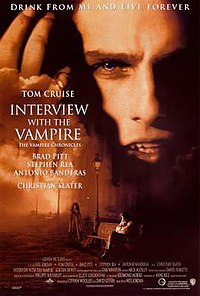
So I think more vampire movie reviews are necessary. I haven't decided exactly what films will be included. I will say that the vampire film I most want to see is Werner Herzog's Nosferatu: Phantom Der Nacht, which is unavailable on DVD, though I plan to try and hunt down a VHS copy. For now I'll chart my early history with the vampiric form, which, as far as I can remember, began with Neil Jordan's Interview With the Vampire.

It concerns a couple of vampires prancing about in frilly collars through Victorian Europe and civil war-era America, gently sucking blood from the exquisite necks of voluptuous 19th century bitches with not a second glance towards their brilliant tits as they dump them in the...well, that's never really explained, but we can assume they were doing something with the bodies, like maybe decorating, after all Neil Jordan never seems to have enough fucking set dressing. Not even Jack the Ripper had enough hooker skin laying around to tailor himself a hooker skin waistcoat and top hat, but these vampires would have enough to make a hooker skin circus tent with hooker skin elephants and clowns and probably a hooker skin audience once the police stopped them selling hooker skin tickets to hookers. Interview With the Vampire seems to be an indictment of old timey law enforcement before it's a vampire movie or a horror movie or a period piece or gay porn.

Not only are these vampires gay, they're fucking sad. They spend the entire movie shuffling around their little Gothic fairytale land complaining about being immortal and their ability to fly. They're like the rich kid in elementary school complaining that their butler forgot to marinate their steak in caviar while you spread the cafeteria's free butter over your leftover breakfast rocks. There's very little action beyond our vampires talking about being vampires and how much it sucks to be vampires; most of the film is just discussing this film's vampire mythology in the context of how much it sucks to be a part of it or establishing the characters.

I'm oversimplifying, so here's a real plot synopsis: Brad Pitt is Louis, the suicidal plantation owner who inexplicably accepts a vampire's offer to become his (totally platonic) companion for all eternity. Really he's the only whiny one, but it's hard to divide him from the rest of the characters when his constant complaining seems to enter the pores of the other characters, turning even the coolest, most relaxed vampire into a tidal wave of frustrated tears. While Louis mopes around about how much it sucks to be suicidal, immortal and at the mercy of human blood to continue his sad little life, Tom Cruise gets to dance around and make fun of him as Lestat, the pretty-fucking-evil nobleman who seems to have been vamping a few decades longer than Louis. He's the elated, fun-loving (and to whom fun means "wanton murder") mentor to Louis' sullen teenager of a student. Louis makes everything worse for the two because of his constant moping, and when his maternal instinct kicks in, Lestat produces a little vampire lady out of a child dying of plague, to whom Louis endlessly mopes. What begins as a playful father-daughter relationship becomes something more sinister as Claudia (Kirsten Dunst) becomes Lestat's equal in bloodthirst and evil. The best scenes (of course because of my predisposition towards thrillers) is the tension between Claudia and Lestat, and the film benefits from shoving the despondent Louis into the background, at least until the end. That's not to say Louis isn't a good character or that Brad Pitt's performance isn't good, but I simply derived more pleasure from watching Tom Cruise and Kirsten Dunst interact.

It took Brad Pitt a long time to become a worthwhile actor. Studios and filmmakers were always putting him in bland popcorn or Oscarbait films without anything to really do. It wasn't until Fight Club that he got a truly extraordinary character to play and began to give great performances consistently (he was fantastic in 12 Monkeys, but he regressed for a few years after that). His casting in things like Seven Years in Tibet, A River Runs Through It or Legends of the Fall were decisions made for the benefit of the film, they were chosen to give the film a bland commodity to trade in that would bring in all sorts of young folks. None of those roles he played were exceptionally written, and were almost unanimously boring ciphers or audience surrogates. Tom Cruise had a similar, if not nearly as pronounced, issue in his early career leading up to, say Born on the Fourth of July. Today it's quite apparent that Cruise is at his best playing villains. My favorite of his performances are Magnolia and Collateral, but our first evidence of this trend came in Interview With the Vampire where he was cast completely against type to loud outcries of miscasting. Casting against type and miscasting are completely different things, though, and Cruise seems nothing short of elated to shed his heroic leading man image and sink his teeth (VAMPIRE HUMOR) into the role of an irredeemable villain, a hellhound of such staggering badness (where the fuck is my thesaurus?) that he declares himself, in a moment of clarity, too evil for Hell.

If Tom Cruise wasn't so fucking pretty and wasn't such an egomaniac, he would probably be a great character actor specializing in villains and dickheads. There's no action franchise more boring than the Mission: Impossible films and we can thank Tom Cruise's villainous megalomania and subsequently disinterested performance for that, but when his real-life evil is funneled into a role not too far removed from his public persona, something notable begins to happen. This was the first time Tom Cruise really got to let loose, and it's always a little shocking to see how honest the evil in his performance is. Specifically I think of a scene in the film that I have a lot of affection for: a scene where Lestat, trying to strangle whatever humanity remains in Louis, invites two prostitutes into their home, kills one and drains the other to near-death. He then implores Louis to end her suffering and accept that to survive he must murder. He begins to torture the prostitute to further goad Louis into murder by forcing her into a coffin. As her forces her in and then lifts her out, he employs a joking, facetious tone that seems to effect the situation in no way aside from to satisfy his natural desire to play with his food. These lines are delivered with a devious evil faked in no way, like making eye contact with the Antichrist. There are a few scenes like this, and they all give me the fucking shivers, but none are so effective as this. It pierces the veneer of acting and puts us in the presence of a real-life maniac. Or maybe not. Maybe Tom Cruise is just the greatest actor ever.

In other news, Kirsten Dunst (something like eleven during filming) plays my favorite "innocent little girl that is actually a bloodthirsty monster". It's a role that requires a great deal of maturity on her part because it is essentially: little girl who has become an adult while keeping the body of a child and the spoiled obnoxiousness of a child but the maturity and evil of a seasoned murderer pretending to be a child. She possesses a charisma that not only is possessed by so few child actors, but that she never seemed to possess again. The role is made that much more difficult by her character being the most intelligent and cunning of the three and it requires a gravitas so rarely contained within a child to make that convincing.

While I'm talking about performances, I'd like to give a special mention to Stephen Rea playing (as Brad Pitt hammers into the audience's head, essentially destroying the effect of the scene) "a vampire pretending to be a human pretending to be a vampire". It's a small role, but an effective one especially considering that Rea is a truly great actor who doesn't get nearly enough good work. He plays a vampire who has waded in decadence so long that he's become a cackling hyena; his overindulgent lifestyle has left him no reason to ever act like he isn't a) on stage b) loudly laughing and joking with other vampire actors or c) murdering. It's such a stark contrast to Louis' stoic pouting that it deserves individual praise.

Now that I've exhausted your attention span with far too detailed accounts of the performances , I'd like to direct your attention to the purely functional story and Louis' slow arc. It's obvious that Jordan is an independent director because he effortlessly draws great work from his cast and spends the rest of his time building elaborate, unnecessary sets. I've heard people complain about the film being overproduced, but I'd argue the point. Surely the long shots of New Orleans ports or the cobblestoned streets of Paris aren't necessary, but they're pretty in a way that isn't especially distracting, especially since almost every scene takes place at night and it gives all the proceedings a gloomy, Gothic aura. All the sets are rendered rather beautifully and effectively, but they are only ever the centerpiece of individual shots, or rather parts of individual shots. Unless we're challenging the long-standing tradition of establishing shots, or the right of establishing shots to be pretty instead of stock footage of the Tanner family's home, I don't think there's anything to complain about here, although I've never seen a movie I would call "over produced", I'm sure it's a legitamite complaint for some films, just not this one.

The only thing about Interview With the Vampire that I think flat-out doesn't work is the whole Interview thing. It's an awkward framing device, like the team of divers in Titanic, that doesn't add much to the film. If it's an excuse for Louis to narrate the film, it's a weak one and there's no reason why you can't just have narration because you think that's how the story should be told. No one's going to bitch about that, not unless you impliment it poorly. It's not something that effects the film beyond repair, but it's worth mentioning because it's a perfectly effective film and none of the truly glaring flaws are that detrimental.

If there's any flaw that really effects the film as a whole, it's Brad Pitt. His performance is so listless and disengaged that we lose our emotional center and the whole piece lacks impact or emotional heft, and that trick he learned for Benjamin Button - acting only with his eyes - doesn't seem to have developed yet.

Despite its scrubbed emotional palette, there's a lot to be said for Interview With the Vampire. I was a little bit in love with it when I was younger and I think it might have had something to do with its sterility. The vampire thing is pretty incidental, it's basically a period piece about some folks who happen to be vampires and sort of eskews the notion that if it's a vampire film it has to be a horror film, and I find the straightforwardness of the approach rather refreshing. It's Gothic and atmospheric, but it doesn't go for scares. It has an endlessly fascinating lead role next to an exquisite supporting role against the backdrop of some really lovely design, and I think that's a lot to go on. Even if it lacks impact, it's memorable for a lot of other reasons, and it's certainly not a mess.

7/10

Tuesday, February 16, 2010

Wolf Father

I'm not against remaking classic monster movies. If there's any remake I get really excited for, it's the remake of classic monster movies. It seems like it should be really easy, mostly because the rules are pretty vague, whereas most remakes force the creative team into a tight framework, lest ye get too original. A monster movie requires only a skeletal formula, leaving a creative team free to explore all corners of the myth. It's staggering what an immense failure The Wolfman is in every respect, specifically in its attempts to work against the script and performances, thinly attempting to connect the two disparate styles with gum and paperclips and the hopes and prayers of orphans made manifest. If the film had committed to a tone, either one of these tones could have feasibly worked, but with half the film pulling in one direction and the other half pulling in the other, it manages to tear itself to shit, fucking up even the most fundamental aspects of story.

First, our protagonist should be someone we like and relate to. I don't take exception to this film's Lawrence Talbot, an actor long estranged from his family who spent some time in a mental hospital during his youth after witnessing the suicide of his mother, but as written and as played by Benicio Del Toro, he's totally static, unengaging and unrelatable.

It's sort of a miracle that Mumbles Del Toro is an actor today, one of the great justices of Hollywood that he can get cast in something like The Wolfman and has an Academy Award. I'm a huge fan of his, specifically his ability to communicate vast emotion through his junkie eyes and drunken slurs, always creating tragic characters with a unique charisma. I love the idea of him in mainstream releases, contrasting so strongly against the typical Hollywood star by never even coming within noseshot (haha dogs) of being boring. To be fair, he's in a badly written, badly directed film that was retooled and fucked with far too much in post-production, a practice that will never be kind to actors. Still, it's a testament to a film's ineptitude that they can make Benicio Del Toro, one of the most inherently watchable actors of his generation, completely bland. Similarly, Emily Blunt, one of the best actors of her generation, is totally wasted in a role that calls for her to overact in that subdued, costume drama way that we're used to from every actress that isn't Emily Blunt. It's a relic from when the film was what it should have been: a moody Gothic horror film. Oh, you still thought it was a moody Gothic horror film? So did I, until about twenty minutes into the film and so did the actors until, presumably, the premiere.

If you hear someone praise this film by tossing around phrases like "this is a Wolfman for our generation", toss that person's face like a fucking salad. Our generation sucks sometimes, and we can all agree (WE CAN ALL AGREE) that our generation's horror films suck more than anything else, including our war. The sad fact is that as you stood over that man's bloodied remains, you'd realize he was right: The Wolfman is a Wolfman for our generation and while an excellent cast and lavish production design are eviscerated, shredded, minced and fucked before your eyes, I defy you not to cry tears of blood thinking about how our kids are going to think we were gigantic fuck-ups. It doesn't even have any pretense towards real horror. Apparently after so many rewrites, reshoots and re-edits, a director loses his mind and decides to make the muppet kung-fu film we've always wanted, but with werewolves.

"Muppet kung-fu" is a pretty appropriate way to describe the tone of this film, but it neglects the gore-porn angle. For some reason, I thought this film was PG-13 going in, a thought I began to question after the tenth anal evisceration. I realize now that I was under this impression because there's no reason for The Wolfman to be anything large or bombastic or, in my mind, any way at all for it to be large or bombastic. It's high-concept horror with no intentions toward being horror. Still, I haven't even begun to describe how fucking mad this film is. Ironically over-violent horror films are a trick learned by direct-to-DVD Blockbuster exclusives years ago and one would think that a major Hollywood filmmaker like Joe Johnston would know how weak it is, but that's the only trick the film has. He doesn't even stage his action with any flair, it's all just campy decapitations between sandwiched between Very Serious dialogue.

At least Anthony Hopkins and Hugo Weaving aren't wasted, Hopkins because he gets the one scenery-chewing role in the film that comes close(ish) to the film's tone, and Weaving because he has never given a bad performance and could only be miscast as a preschooler. But those are just two parts of the film that don't explode in fiery failure

I love truly mad or unusual films, especially ones that were produced for a large audience in the Hollywood system, but that's not what The Wolfman is. It's pseudo-weird, playing tricks hacks have been playing for years to get a reaction stoned high schoolers have been giving to cheaper films for years. It's a movie for stupid people. The sort of thing people go to to talk loudly over and forget about a few minutes after they leave the theater. It's something that preteens go to until they discover alcohol and sex, but since it's rated R they won't be able to get in and will have to discover alcohol and sex. In fact, all the babies born of preteens in the next two years will be called "Wolfman babies", which will confuse religious crowds in the coolest way possible. As in shooting babies with silver bullets. Yeah. That'd make a good film.

2/10

Friday, February 5, 2010

Portrait of a (Vampire) Killer

Watching From Dusk Till Dawn has helped me realize why horror films so rarely work. Things need to change and evolve, become new and connect with a new audience. Horror hasn't changed since the 80s, even today when we go see a horror film, nine times out of ten we're watching teenagers get hunted by a murderer of some sort, or maybe we're just watching a person meet a slow demise. People don't actually shake in terror from these things, it's just gore-porn with no real ideas or intentions behind it. Because Hollywood has been lazy and audiences have been even worse, we've been trapped in a revolving door full of mutilated corpses for about thirty years.

That's not a new criticism, but it's a fucking relevant one until someone does something about it. It means a lot to me that From Dusk Till Dawn exists for that reason, even if no one understands its intentions. You see, a major change in any artform has to come in a package that's easy to consume for the public, and after that the truly great genre films will appear. By nature, true horror films are not easy to consume for the public. When something that's truly horrifying but lacking the defining genre stereotypes that make it identifiable as movie horror arrives, people do not know what to do with it and tend to discard it. We're left with truly exceptional experiments that succeeded in more ways than they had any right to that were left totally ignored by the public, and whose reputation has less to do with the actual intentions of the film and more to do with the self-conscious kitsch it wrapped itself in and the reputations of the creative team involved.

Robert Rodriguez and Quentin Tarantino succeeded more readily than any other filmmaker in trying to do something new and different with horror. I can understand how heartbreaking and disappointing the film's failure was and how that could have driven Tarantino to never touch the genre again and to return to what made him popular in the first place with the nice but forgettable Jackie Brown. If you ask me, and you may as well because you're reading this, From Dusk Till Dawn is Tarantino's strongest screenplay of the 90s, if only because it pulls off such bizarreness so flawlessly.

I can't even begin to summarize the film's plot, so I will say this: it is about two bank robbers slash brothers in Texas. There's a preacher and his family in there somewhere, a bar, a few shootouts and the film may or may not have something to do with vampires. All those plot points and secondary characters are peripheral, though. If you're determined to think of it in these terms, you could call the bank robbers the "monsters" of the film, specifically Richie (Quentin Tarantino) a character that the film lives and dies for. Everything truly important and edgy happens in the first thirty minutes of the film when the secondary characters are just barely introduced and just barely defined.

Which inelegantly brings me to another point. The lengths the film goes to to define characters most people would see as stock (murdering bank robbers) are interestingly contrasted with the film's half-hearted attempts to define the preacher, Jacob (Harvey Keitel, clearly the most professional and actorly of any of these actors), who receives a glazed over characterization in one scene where Seth (George Clooney) prods him for information on his life. The preacher gives him all the typical character bites: his wife died a painful death, he lost his faith, quit his job, he's taking his children with him as he runs away out of grief and the two criminals that have kidnapped him are pushing him to the edge, and he's willing to kill for revenge should either of his two children be hurt. In that one scene we're given a character who is often seen as an interesting, compelling character, but Tarantino shows him to be more a stock character than the murdering bank robbers that he loves with all his heart.

There's a story that Tarantino started writing this film the night that he won his Academy Award. If Tarantino said that in an interview or something he intentionally gave his film another layer of meaning. Tarantino regards Jacob's character with respect, but is far less interested in holding his hand through his routine arc than he is with showing a deranged killer with no capacity to change run into obstacles that he can't wrap his child-like mind around. I hesitate to say Tarantino spits in the face of Oscar bait, because I don't think that he would have included Jacob in the film and given him such rich dialogue and hired an actor he respects as much as Harvey Keitel if he didn't love the character, but I certainly think his presence in the film is a commentary on what was happening in the world of film at the time and how critics and audiences were lumping his films with stuffy domestic dramas just because Pulp Fiction won an Academy Award. Tarantino's love of film has always been B-Movies and exploitation and trash, whereas the sensibilities that the critics fawn over, like his dialogue and his careful characterization, are derived from art and life in general.

In more ways than the blatantly obvious, this film is Tarantino's statement on winning an Academy Award. The clearest evidence that this film is all about Richie is that Tarantino himself plays the character, seemingly untrusting of another actor to take on a character he holds so close to his heart. If we were to list all the movie psychos, my hard drive would probably fry and I'd crash Google's servers, but Richie Gecko is a totally different beast. The movie doesn't relate to him on our terms, it relates to him on his own terms. In many scenes, we're literally inside the head of a murderous psychopath, and that world's similarities to ours make it all the more seductive. The differences are painfully subtle, but perfectly captured in my favorite shot in the film. At one point, Kate, the daughter of Jacob (played by the uniquely sexless Juliette Lewis) turns to Richie and says "Richie, could you do me a favor and eat my pussy? Please?". The suddenness of this statement keeps us wondering if it's really happening for about a second too long, and Richie is totally transfixed by her in all her sexless glory. How the great Guillermo Navarro shot her is a mystery to me, but the effects may be the purest little nightmare I've ever seen. Her eyes are different colors, one a harshly lit green, the other much darker. Her hair is a texture that you would be afraid to touch or that you might have nightmares about being suffocated by. The way her face dominates the frame suggests the powerful sexual urges Richie feels when near a woman he finds sexually desirable. It's interesting to see this scene in context, too, because the two best scenes in the film, featuring the Geckos and a hostage named Gloria, shows Richie's sexuality in a different mode, perhaps fueled by a lack of physical attraction to Gloria.

These two scenes, as I've said, are the best in the film. At the beginning of this post I suggested that From Dusk Till Dawn had a very new brand of horror up its sleeve and it's mostly expressed in those two scenes. In fact, they're so dark and so suspenseful and so perfectly realized that as I watched them this most recent time, I found myself sweating in terror. My point about modern horror is that the novelty of slashers and such has worn off after thirty years, and while I'm well aware of many horror films without men in hockey masks, so few of them work without eventually selling out and becoming just another cheap horror film. An untrained eye could accuse From Dusk Till Dawn of the same crimes, and it wouldn't be a totally unsubstantial argument, but I would argue that Rodriguez and Tarantino aim to make a large statement not only about horror, the history of horror and the optimistic future they have in mind for horror, but the direction that horror is going in thanks to lazy filmmakers and audiences. Their new brand of horror is self-contained and featured in just a few scenes. After that, as is typical of Tarantino's writing, he bounces around from style to style, quickly getting bored with one, but always moving seamlessly.

In fact, Tarantino's genre infatuation (and I'm a man who loves his genre films, so Tarantino is really right up my alley) has never more blatantly been the foundation on which is film is built. Observe: most every character in this film is a genre stereotype who behaves with the logic of that genre "world". I already discussed Harvey Keitel's character, but Seth Gecko, George Clooney's character, is clearly super-slick action hero type, perhaps even a James Bond type. You'll notice he's the only one in the film who can kick a shelf full of bottles and have the exact one he wants fall right into his outstretched hand. He's the only one who can punch someone standing right behind him and cartoonishly knock them unconscious, and you'll notice that he's the one who gets all of Tarantino's trickiest dialogue. Richie is a bit harder to peg, but as I watched the film I got the feeling that his character was mostly derived from screwball comic relief characters. Of course, the twist is how unhinged that person would be, always tagging along with his slick, handsome older brother and watching everything he does fail in comparison to his brother's casual successes.

Now I think it's time we address the elephant in the room: vampires. The fact that it's vampires is incidental, and there's a lot less going on in the second half where Tarantino and Rodriguez indulge their love of B-movies, but there are a few things of note. I'm always taken aback at Tarantino's death scene no matter how many times I see this film. He's become more sympathetic since he murdered Gloria and it's become more and more clear that he's just a child. His death scene has an air of tragedy, and I think that has a lot to do with the filmakers' love and sympathy for the character. Also, Seth makes a statement about the vampires that has a lot behind it:

"I know why you lost your faith. How could true holiness exist if your wife can be taken away from you and your children? Now, I always said God can kiss my fuckin' ass. Well, I changed my lifetime tune about thirty minutes ago 'cause I know, without a doubt, what's out there trying to get in here is pure evil straight from hell. And if there is a hell, and those monsters are from it, there's got to be a heaven. There's just got to be."
There's a lot happening in this speech, but I'd like to direct your attention to the bolded statement. Richie was the monster in the film's first half, and when the vampires are introduced, he is killed. I'm inclined to say the reason the second half exists at all is to mitigate Richie's actions by comparing him to creatures of pure cocksucking evil (there's also a line at the very end about psychos that has a similar effect). Richie may have been a bad person, but he certainly wasn't pure evil straight from hell.

I admire Tarantino's tenacity more than anything about him, but I can't bring myself to commend his performance here. I think it might be a symptom of two major personalities working together so shortly after becoming big fucking deals and not being able to be completely honest with each other. If Tarantino had directed this film and had viewed the dailies, he would have understood why his performance wasn't working. I understand that he's protective of the role, but he's just not right for it because he's not an actor. It's absurdly clear when he's interacting with Clooney, who's doing some of the best work of his career in this film. Tarantino understood that he has an awkward screen presence, but he did not understand that an awkward screen presence is not the same thing as an awkward presence in this film. I think Tarantino learned his lesson here, too, because to illustrate my point, it's very easy to point to Frederik Zoller in Inglourious Basterds. His very presence disrupts the flow of the film with its awkwardness without ever once taking you out of the film with stiff expressions and movement and stilted speech.

Aside from Clooney, my favorite performance in the film is Brenda Hillhouse (who I just discovered was Tarantino's acting teacher) playing the hostage Gloria. She only has a few lines, but the camera is unwilling to stop looking at her, and she gets the most interesting character moment in the film that isn't given to Richie. When Richie innocently and disarmingly invites her to watch TV in the other room with him, she spends a few moments hesitating before she and the audience begin to understand that he's genuine and that he is truly a child. We understand his capacity and penchant for violence, but we are as yet unaware of his capacity for sexual violence. We know something bad is happening, and there's an ominous fog over the whole scene, but we root for Gloria and hope that she survives and that we've just misread Richie. How much Hillhouse communicates just with expression is one of those acting marvels.

I can't express how badly this film has been misjudged. Hopefully history will be kind to it, but its only reputation is as the midnight movie that it sort of is for about thirty minutes. It's given no thought or credit outside of that and I blame audiences too lazy to engage with it on a level outside of exploding vampires. It's not unusual for a brilliant genre film to be ignored for everything but its cheap pleasures, but the disservice done to our fucking culture by ignoring From Dusk Till Dawn is head-spinning. The beating it took critically and at the box office may not have been your fault, peers of mine who were six years old when this film came out, but it's your fault for not rediscovering this film for more than its trashiness.

10/10

Monday, January 25, 2010

Puppy Love

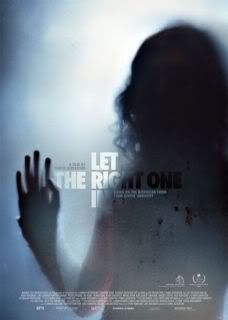
Let the Right One In is a film that I've been interested in for a long time. During its initial theatrical run, it didn't come to my state. When it was released on DVD there was a great deal of controversy about the dumbing down of the subtitles and I opted to wait for the original translation to be released on DVD before I viewed it.

It was thus brought to my attention that my best friend, Netflix Instant Watch, had a copy of the film with the original translation intact and. Unlike many foreign language films Netflix Instant Watch pimps, they don't force a dubbed version on me like the public school system completely failed me. Watching a dubbed film is like having my dad cynically half-describe a movie to me from the other room. In other words, it's for children. I know people my age who refuse to watch films with subtitles. The first film I saw with subtitles was Crouching Tiger, Hidden Dragon when I was ten. Maybe I was born for this, but I think it's more likely that you should read a book sometime.

I digress. Vampire films have a spotty history, and the best comparison I can make is to pirate films. The best pirate film ever made is obviously The Crimson Pirate, but ever since then there have only been a handful of pirate films produced that are even worth watching. While I'm an Interview With the Vampire apologist (I love production design, okay?), I could probably count the great vampire films on one hand. The genre isn't exactly known for being fresh. So few vampire films did anything different since Bram Stoker introduced vampires to sexuality. And pop culture. And we've been watching vampires make out sensually for the eighty years since.

Let the Right One In trades in sexuality, but it goes at it from several fresh angles and it trades in more than just that. To its advantage, it really isn't a vampire film so much as a romantic (I use the word loosely) thriller with a vampire in it. It's loosely plotted and mostly concerns a 12-year-old boy named Oskar who is viciously bullied at his school and his relationship with Eli, a girl who looks to be about his age but is quickly revealed to be a vampire. Mostly we follow their lonely worlds as they expand to include each other.

The film's violence plays into that as well. Easily the best blood-sucking or vampire-related imagery I've ever seen in a film, it's especially effective because Eli doesn't just appear innocent, but is innocent. There are several big, floating question marks around her character that not only have to do with her past (where there are several big, scarred question marks floating) but with her character. Despite her age, she is clearly very sheltered and is in most ways a 12-year-old, but killing for survival brings with it a certain maturity that only appears in flashes. Her character is handled with a logic. Lina Leandersson plays Eli with the characteristically vampiric flourishes, but at a different angle. Mostly we think of vampires as calm, collected and cold monsters because they've lived for so long and rejected emotion in a way that we think is obvious to assume a person that old would. Eli is calm, collected and cold, but it comes from a place of innocence and curiosity rather than one of cynicism. It's an extraordinary performance.

Elsewhere, the cinematography seems to be influenced by Asian, and specifically Korean, and even more specifically Chan-wook Park films. It's not aggressive in its beauty, but holy fuck it's beautiful. Cinematographer Hoyte Van Hoytema has a marvelous aesthetic, framing his shots symmetrically with slow tracking and a bleak color palette, mostly devoted to blacks and various shades of white. The production design is obsessed with squares and harsh angles, and maybe that's characteristic of Communist Sweden, and if it is I'd like to high five the shit out of whoever designed that gulag of a country at the same time as sort of be scared of ever going near it. It's such a perfect match for the cinematography, and if you ever want to discourage someone from being a Communist, all you have to do is show them this film.

The visuals do so much to push Let the Right One In as a horror film, and they do a damn good job of it. As I noted above, it's not really a horror film at its heart, but director Tomas Alfredson seems intent on showing us that if he had wanted it to be a horror film, he could have made it a horror film. There are a handful of scenes that, aside from the visuals, are extremely effective minimalist horror, and none of them directly involve any vampiring, as if to further prove the director's talent.

It's been years since we've had a worthwhile vampire film, much less an essentially perfect vampire film.

10/10

Wednesday, January 20, 2010

Isn't It Good

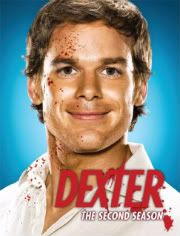
It's a curious thing to watch something slowly but swiftly move into greatness, and there's nothing more satisfying than seeing a great creative individual or team turn their failures or missed opportunities into greatness. Every shortcoming of Dexter's first season has been used as a trampoline to grab onto the treebranches of excellence, and the excellent second season would not be possible without those very specific shortcomings. I know in my boners that the writers and producers of Dexter knew that their first season would be their weaker season, but if they could succeed at making it a hit, the second season would be their great achievement.

That said, it has a great deal of surface flaws that could have been fixed quite easily. That it's rife with flaws is just something one has to learn to respect about serialized drama, and that these flaws are so wildly specific to the need for twelve hours of drama lest ye die is disappointing. It's the eternal reminder that, as a product, film and television is always going to be hamstrung by its need to meet certain requirements for the sake of marketability and longevity of investment. I'm more willing to forgive these flaws, though, because television offers a venue for serialization at the same time as long-form drama and while certain concessions are necessary, they're not concessions made by the creative team but rather by the medium they're working in. Television is a flawed medium and that's not going to change until televisions themselves are entirely replaced by the more malleable streaming content or until a mad genius figures out how to work commercials into a narrative.

For those of you who haven't seen the first season, I'll be discussing plot points for the second season that tie into the end of the first season. Also, you may want to know that the show is about a blood spatter ANALyst and sociopath who murders bad guys. In faggot's terms, spoile4s hehe.

After dispatching the Ice Cream Sandwicher, Dexter has become distraught. For almost a year the personal mindgames he played with another serial killer gave his life verve and meaning. His sister is a shaken mess and living with him after her intensely intimate encounter with the Ice Man Cometh and Sgt. Doakes is suspicious of Dexter and following him at night. Oh yeah, and a scuba diving team uncovered the dozens of dismembered bodies Dexter has been dumping in the ocean for years.

On the lame side of things, Dexter's girlfriend Rita thinks that Dexter is a heroin addict and sends him to Narcotics Anonymous where he meets a fox named Lila who, like all attractive women, is totally out of her mind. This is where the series shows its allegiances. When given the choice between being an intense thriller slash dark comedy and being a soap opera, it jumps into the neon jean shorts of soap opera with no shame.

And god damn the writers for taking the easy way out, because they strike dogs about halfway through the season only to give it all up like they couldn't wait. As the first season flirted with dark comedy and horror, the second season becomes a full-fledged black-as-the-heart-of-Africa comedy and we get a scene or two of such knee-shattering horror that it became heartbreaking to watch the writers and producers cop out for the sake of tits. Everything aside from its meandering narrative is an improvement over the first season. Every character is fleshed out and given dark, rough angles, especially Angel, the loveable brown spot on Dexter's rainbow of political correctness who gets a comic and tragic angle and goes through a very sympathetic arc. Deborah, Dexter's sister, is given the most complete arc that also falls victim to some soap opera writing towards the end, but her story is incredibly true to her established character, which goes against the time-honored tradition of destroying a well-established character and rebuilding it for the sake of the plot.

But really the best character on the show was Sgt. Doakes, the endlessly intense, borderline psychopathic police officer who is obsessed with proving that Dexter has some kind of secret. This is the dynamic that allows the second season of Dexter to become the best thriller I have ever watched on television. All those stupid asides that focused on Doakes last season that I complained about are given purpose. Without his character fleshed out, and without his background probed, we would never understand the transformation he goes through and we'd never sympathize with the horrors he goes through.

What makes Doakes such a spectacular antagonist is not only the way Dexter's heroism (in that he's the character we follow, and therefore the hero of the story even if someone else has the moral highground) is established against the Ice Tray Cracker (who is pure, swamp monster evil) in the first season and then challenged by Doakes in this season. Doakes is an asshole, for sure, but he's also a good cop who plays by the rules and gets the bad guys the right way. Dexter is an evil little bastard who hopes Doakes fails so that he can kill the criminals that slip through his fingers. Like all great hero-villain relationships, the conflict is tied to our own sense of morality and we choose sides based on that. If a film or television show understands that, they have the viewer by the balls.

I misjudged Dexter based on its first season and want its forgiveness. I take back everything mean I said about the first season and only stick by my criticisms of the second season. It's a strong argument for not passing judgment until you've seen every episode of a television show, but mostly I'm pleased that Dexter called me out on my lack of patience. It's a show with patience and I'm glad I stuck with it. I encourage anyone considering starting with this show to approach it with the same patience.

9/10

Friday, January 8, 2010

Waking Nightmares

I'm not ashamed to say that if I'm asked what I thought the scariest movie was of 2009, I say Coraline without any hesitation. For this review, I watched it with my four-year-old brother and ten-year-old sister and both of them nearly wet their skulls in terror. While my ample body hair will weave together and crush my skeleton as a defense mechanism against fear, I understand the sensation from a scientist's position and think Coraline would be the best candidate to inspire the sensation should I be a weaker man one day.

Horror for children sounds a bit derogatory, so let's clear something up: films should not be made with a demographic in mind. The marketing campaign is the one that decides the demo, but because a film is animated, or features a child as a protagonist, or isn't rated R for extreme skull fucking, doesn't delegate it to being played on repeat in an orphanage until rug pirates do something made of chocolate.

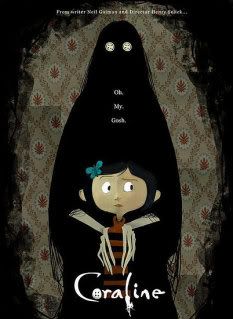
Coraline is the very Gaiman-esque story of a little girl who encounters a magical creature in her house, one that assumes the form of her mother and populates a world almost precisely like her own. But where Coraline's home world is as dull and boring as anyone's (except she lives in a STOP MOTION WORLD, which would be cool, the little brat), this Other world is a fantastical world where everything is tailor-made to Coraline's wishes. Before long, this Other world starts to show its seems and Coraline's Other Mother begins to show some nasty intentions that would get her reported to CPS by any responsible neighbor.

The film is based on a Neil Gaiman book from 2002, and while I'm not familiar with that particular book, I'm familiar with Neil Gaiman and I'm familiar with Dave McKean's cover art, and I'm familiar with the crushing disappointment I felt when I discovered that the film wouldn't be in the style of McKean's art. As much as I love seeing stop-motion animation, and I love stop-motion, I can still lament what a visual handjob this movie would be if it had been done with traditional 2D animation in this style.

Yeah, yeah, we all know (Maybe. Who are you?) how much I love hand-drawn animation, but its underappreciated little brother, stop motion, is pretty fucking incredible as well. It's also the most labor-intensive form of animation. When I was nine or ten or something, I saw a featurette on the animation process behind Chicken Run where they explained that a really good day saw a little less than one second of animation being shot. I know to this day that I would probably hang myself after the first week, which would give the desperate animators a chance to cut some corners and use my dangling feet as a piece of set dressing.

It's unfortunate that, unless James Cameron's home-theater 3D is the real deal, I'll probably never be able to see this film as it was intended ever again. In 3D, Coraline is truly impressive. As I mentioned in my brief writeup for my 2009 in Review, stop motion offers the perfect venue for 3D: while it fails to add a realistic depth to a cartoony CGI film, and it looks too cartoonish for a live-action film, stop motion is the perfect compromise between animation and live action, and therefore provides the most seamless 3D experience.

And look at that, the 3D does something in this movie. Instead of eye candy, it becomes a visual cue that we have entered the Other world (that's not to say Cameron didn't do something similar in Avatar, but I think that the jungles of Pandora were marked more by a specific color palette than use of 3D, although there was some of that). Our first glimpse of this world is a wide, deep-focus shot of a kitchen, lit with the glowing amber and bright reds that will also come to characterize the Other world, just as the dull blues and grays will come to characterize the real world. Coraline's wonder, in this case, is our wonder.

Coraline herself is exceptionally expressive for a stop motion character, something that I haven't ever really expected from this medium. Her emotions never seem out of place for an eleven-year-old girl and the filmmakers are tasteful enough to not juxtapose moments of inhuman maturity and clarity for the sake of plot-building against more realistic eleven-year-old

Like all of Gaiman's work, it's rooted deep in mythology, and if he has aspirations to be a modern myth-maker, he'll never come closer to success than with Coraline. His inclusion of so many mythological elements, such as talking animals with personalities based on that animal's traits (the laconic cat, the scheming rat), the abundance of the number three, and lots of other stuff that you don't need me to list. As a hero, Coraline is a very typical eleven-year-old (I'm guessing) girl, and the film doesn't jump around that to try and stuff her into the mold of the hero. She's bratty, argumentative and impulsive and has the interests and dress sense of a little girl raised by professional gardeners.

But the real triumph, the real terror of the film is the Other Mother. With buttons sewn over her eyes, she at first appears (aside from, you know, the buttons) exactly like Coraline's real mother. Slowly over the film, she becomes more insect-like and the buttons more like the beady black eyes of an insect. In her final scene, the set dissolves into a nightmarish spider web and she into an enormous spidermonster (?) that will send your children to the therapist for years. Maybe it's because I never expect a movie marketed towards children (I know, I know) to even attempt horror, but that scene has never not given me the fucking spine-tingles.

In the end, my love for this movie comes down to a simple matter of taste. This sort of subdued horror, especially in animation, is something that appeals endlessly to me. There are things in this movie that are truly inappropriate for children, not because of the content, but because of the execution. Some of the creatures designed for this film and the world they inhabit is exactly the sort of thing that inhabits a grown man's nightmares. Where most horror films try to startle you and give you a murder boner, Coraline gives you nightmare imagery and claustrophobic editing, and I'll consider those scares far more genuine any day.

10/10